

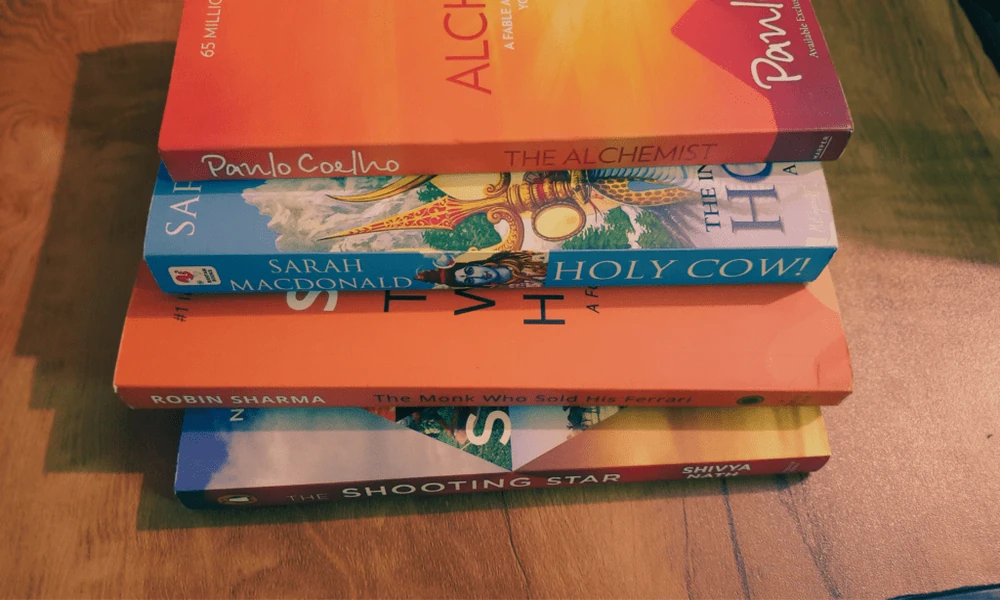
A long trip and a good book are natural companions. The reading that happens at sea, in a window seat over the Atlantic, or on a quiet afternoon at a port café tends to be more absorbing than anything you’d manage at home. The right book deepens the experience of travel rather than distracting from it – it gives you context, language, and a frame for what you’re seeing that makes the whole trip richer.
What Makes a Book Travel-Friendly
Before getting into titles, it’s worth thinking about what makes a book actually work for travel. Physical weight matters more than most readers expect – a 700-page hardcover becomes a real problem in a carry-on. Paperbacks and e-readers solve the weight issue, but if you’re a physical book person, a slim paperback or a short novel is worth prioritizing over an ambitious brick, no matter how good the reviews are.
Narrative momentum matters too. Travel reading gets interrupted constantly – by meals, by arrivals, by conversations, by the view out the window. Books that are hard to re-enter after a break are frustrating companions. Novels with strong forward momentum, essay collections you can dip in and out of, and narrative nonfiction with clear chapters all hold up better to interrupted reading than densely structured literary fiction that requires sustained concentration.
Finally, the book’s relationship to your destination can transform the experience. Reading a novel set in Lisbon while you’re walking Lisbon’s streets, or a history of the Mediterranean while you’re sailing it, creates a feedback loop between the page and the place that makes both more vivid.
Fiction That Travels Well
For European travel, a few categories of fiction reliably reward the investment.
Historical novels set in your destinations are particularly satisfying. They give ordinary streets and buildings a narrative context that transforms sightseeing into something closer to time travel. Hilary Mantel’s Wolf Hall for England, Elena Ferrante’s Neapolitan novels for Naples and Rome, Patrick Süskind’s Perfume for eighteenth-century France – these aren’t travel books, but they do something that travel books rarely manage: they make you feel a place from the inside.
Literary thrillers with European settings are well-suited to the pace of a long trip. The plotting gives you a reason to keep reading through interruptions, and the best of them use setting deliberately enough that you’re absorbing geography and culture alongside the story. Donna Leon’s Venice-based detective series, Alan Furst’s WWII Europe novels, and Anthony Horowitz’s various mysteries all deliver on this combination.
For European cruises specifically – where days alternate between sea days with long stretches of reading time and port days when the book gets set aside entirely – novels with natural stopping points between chapters are practical choices. A collection of interconnected stories or a novel structured in distinct sections handles the rhythm of cruise travel better than something that builds continuously without natural breaks.
Nonfiction Worth Bringing
Travel narrative sits in a category of its own. Books like Patrick Leigh Fermor’s A Time of Gifts, which follows a young man walking from the Hook of Holland to Istanbul in the 1930s, or Eric Newby’s A Short Walk in the Hindu Kush, offer the pleasure of vicariously inhabiting a journey while you’re on one yourself. The genre tends to produce particularly absorbing reading on long travel days.
History and cultural essays can enrich a trip in ways that guidebooks don’t. John Julius Norwich’s histories of Venice and the Mediterranean are readable enough to bring on the trip rather than leaving them as pre-departure research. Mary Beard’s work on Rome and ancient history translates academic rigor into genuinely entertaining prose. These are books you can read a chapter of before visiting a site and understand what you’re looking at differently than you would have otherwise.
Food writing belongs in any European travel reading list. Patience Gray’s Honey from a Weed, set across southern Europe, is both a cookbook and a memoir and reads beautifully on its own terms. MFK Fisher’s The Art of Eating is one of the great American books about European food and life, and it pairs particularly well with any itinerary that includes France.
A Note on E-Readers
For long trips – and especially for cruise travel, where you might be away for two weeks or more – an e-reader solves the logistics problem completely. The ability to carry dozens of books without adding weight is a genuine quality-of-life improvement. The reading experience is better than it used to be, and the convenience of being able to start a new book immediately when you finish one, without rationing your reading to avoid running out, is hard to overstate once you’ve experienced it.
If you haven’t converted yet, a long trip is a reasonable occasion to try.
The One Rule
Bring more than you think you need. Travel reading happens in longer uninterrupted stretches than home reading, and running out of book mid-trip is a specific kind of disappointment. Whatever you’re planning to bring, add one more.